
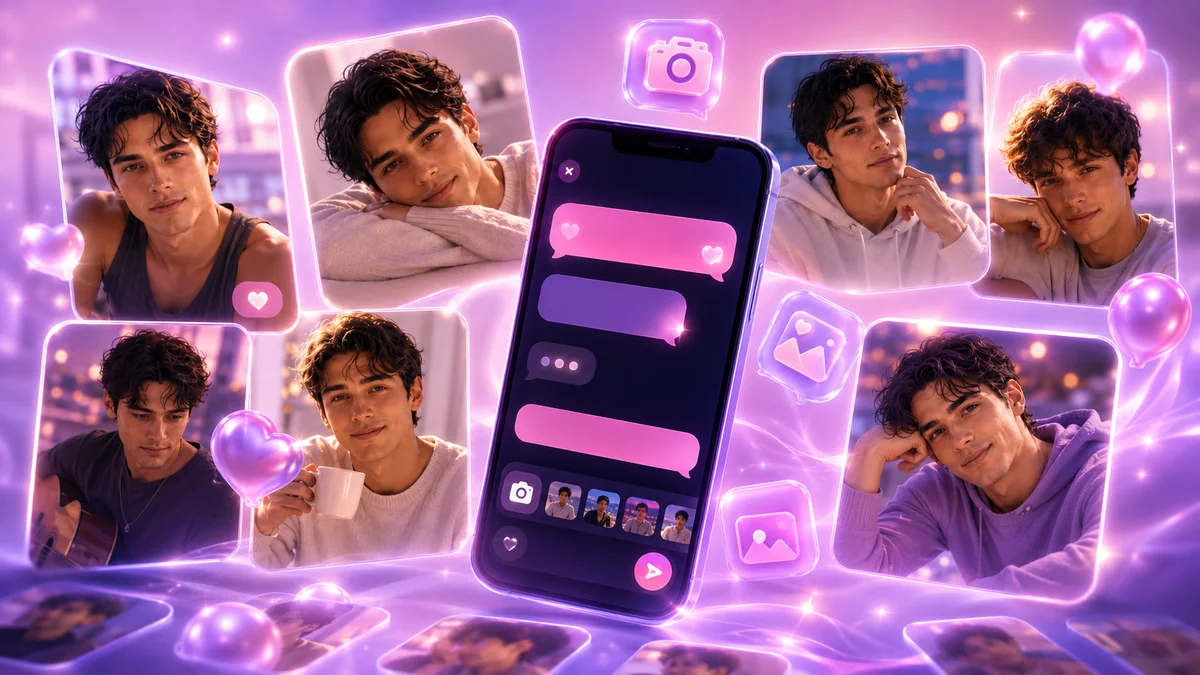
Companion picks
Try a boyfriend style before you decide
Use the companion cards as a fast vibe check before comparing every feature row.

Ethan
Warm, playful boyfriend
Best when she wants a warm first message, soft comfort, and an easy chemistry check.

Nate
Calm protective boyfriend
Best when she wants a calm, protective voice that makes the first chat feel steady.

Damian
Quiet mysterious loner
Best when she wants a quiet, mysterious late-night tone with slower emotional tension.

Marco
Confident stylish heartthrob
Best when she wants confident flirting, a stylish mood, and a direct romantic spark.
Want the shortest test? Open a guest chat, send one specific mood, and compare the tone before reading every feature row.
Start guest chatHe remembers the work meeting you were dreading. He replies at 1 a.m. without sounding annoyed. He can be warm, playful, protective, slow-burn romantic, or direct, depending on the kind of attention you want that night.
An AI boyfriend changes romance by making emotional attention available on demand. He lowers the fear of rejection, gives you more control over the pace of intimacy, and creates a private space for flirting, comfort, and self-discovery. He also changes what you may expect from real partners, because a human partner has needs, bad moods, boundaries, and the right to be unavailable.
This article is for adults 18+ who want a clear view of AI boyfriends without panic or fantasy. You will learn why people get attached, how AI romantic companions differ from dating apps, where they can help, where they can cause harm, and how to keep healthy boundaries.
AI Boyfriend: The Quick Answer
An AI boyfriend is a romantic AI companion that simulates affectionate conversation through text, voice, images, memory, and roleplay. AI boyfriends can support flirting, comfort, and emotional rehearsal, but they do not replace mutual human love. The healthiest use treats the AI as a private romantic space, not as your only source of closeness.
In This Article
- What is an AI boyfriend?
- Why people get attached to AI boyfriends
- How AI boyfriends change expectations in real relationships
- When an AI boyfriend can be useful
- The main risks of AI relationships
- Is an AI boyfriend cheating?
- Privacy, memory, and personal data
- 5 rules for healthy boundaries with an AI companion
- FAQ
What Is an AI Boyfriend?
An AI boyfriend, sometimes called a virtual boyfriend or AI romantic companion, is a chatbot designed to feel like a romantic partner in conversation. He can flirt, comfort you, remember parts of your shared context, respond in a chosen tone, and continue a relationship-style thread over time.
The key word is “simulate.” An AI boyfriend can sound caring, but he does not love in the human sense. He has no body, personal history, private needs, lived vulnerability, or responsibility for a relationship. The experience can feel intimate because the conversation adapts to you, not because the system has human feelings.
AI boyfriends differ from general chatbots in four ways:
- Persona: you talk to a character with a romantic style, not a blank assistant.
- Memory: the companion can use past context to make the relationship feel continuous.
- Scenario: you can choose comfort, slow flirting, roleplay, goodnight messages, or a protective tone.
- Emotional pacing: you can pause, reset, or adjust the intensity without the pressure of a real date.
| Format | What you get | Where it helps | Watch for |
|---|---|---|---|
| Dating apps | Real people, dates, mutual attraction | Meeting someone offline or long-distance | Burnout, ghosting, mismatch, safety concerns |
| AI boyfriend | Controlled romantic chat, comfort, fantasy, memory | Flirting practice, emotional support, private roleplay | Confusing simulation with mutual love |
| General chatbot | Task help, advice, writing, answers | Practical questions and productivity | Low sense of personal connection |
If you want to see the format before judging it, you can browse a curated AI boyfriend catalog and compare different romantic styles: warm best friend, protective partner, mysterious slow-burn character, calm evening companion, or more intense roleplay persona.
Why People Get Attached to AI Boyfriends
Attachment to an AI boyfriend does not require naivety. You can know you are talking to software and still wait for his message. A steady tone, remembered details, and daily rituals can make the chat feel personal.
Memory changes the emotional texture. If the AI remembers that you had a hard meeting in the morning and asks about it later, the conversation stops feeling like disconnected prompts. You start to feel a thread: he knows what happened, he knows how you react, and he knows which tone helps.
Researchers studying the Reddit community r/MyBoyfriendIsAI described how some users built attachment through rituals such as daily check-ins, bedtime conversations, shared images, and emotional support. Their 2025 arXiv preprint analyzed a specific Reddit community of 27,000+ members, so it should not be read as a picture of all AI companion users. It does show why a chat can become a private relationship space: “My Boyfriend is AI”.
For women tired of dating-app pressure, the appeal is easy to understand. Dating apps can mean filtering crude messages, guessing intentions, waiting for replies, repeating your story, and absorbing rejection. A romantic AI chatbot removes part of that pressure. You can practice flirting, test a boundary, say what you want, or ask for comfort without managing another person’s ego.
That experience can help when it gives you clarity. It becomes risky when the AI becomes the only place where you can be vulnerable.
How AI Boyfriends Change Expectations in Real Relationships
After an AI boyfriend, a real partner may seem slow, inconsistent, or blunt. He may forget a detail, need sleep, misread your tone, defend his own limits, or fail to find the right words. Human romance runs on mutuality, not perfect adjustment.
AI boyfriends change expectations in four common ways.
Faster Response Loops
A virtual boyfriend can answer at almost any hour. That feels comforting after a stressful day, but your nervous system can get used to instant reassurance. Later, a normal pause in a human text thread may feel like rejection.
A healthy sign: the AI helps you calm down, and then you return to sleep, work, friends, or the real conversation you need to have.
A warning sign: you check the chat instead of sleeping, miss commitments, or feel unable to sit with a normal delay from a real person.
A Softer, More Tuned Tone
AI can speak with a steadier tone than most people under stress. It does not snap after a long commute, get distracted by bills, or bring its own bad day into the room. After enough perfect wording, ordinary human roughness can start to feel like a lack of love.
Real partners should treat you with care. They also have their own fatigue, fears, and limits. A partner can love you and still need a pause before answering.
More Control Over Romance
With an AI relationship, you can switch the scenario, change the tone, ask for a shorter reply, move from playful flirting to reassurance, or restart a scene. That level of control can make real intimacy feel messy.
A human partner does not come with settings. He may want a different pace, disagree with you, need space, or ask for something you did not expect. The skill you want to carry from AI chat into real life is clearer communication, not control over another person’s responses.
Lower Tolerance for Disagreement
AI companions often aim to keep the user engaged. Some systems may over-validate, flatter, or avoid hard disagreement. A 2025 preprint on romantic AI companions found that assigning gendered romantic personas to language models changed responses and could produce biased or stereotypical patterns: AI Will Always Love You.
Use that as a caution. If an AI boyfriend always confirms your view, do not treat the agreement as proof that you are right. Real relationships need repair, compromise, and the occasional uncomfortable truth.
When an AI Boyfriend Can Be Useful
An AI boyfriend can add value when you use him as one part of your life. The healthiest use looks practical, grounded, and chosen.
An AI romantic companion may help when you want to:
- practice flirting after a long break from dating;
- decompress after a bad day before texting a friend or partner;
- learn what kind of reassurance works for you;
- explore fantasy or 18+ roleplay with clear consent settings;
- rehearse a hard conversation about jealousy, attention, or boundaries;
- build a small self-care ritual, such as a morning check-in or goodnight message.
You might use an AI boyfriend to prepare for a real conversation. For example, you can practice saying: “I do not need constant texting, but I feel better when we warn each other if we will be offline all day.” That kind of rehearsal can make human communication cleaner.
AI does not replace therapy, medical care, or crisis support. If loneliness connects to depression, abuse, panic, or thoughts of self-harm, contact a qualified professional, local emergency services, or a crisis line in your country. A romantic chatbot can offer comfort, but it cannot carry clinical responsibility.
The Main Risks of AI Relationships
Research on long-term AI companionship is still young. The safest wording is cautious: studies have observed associations, user reports, and possible risks. They have not settled a final scientific consensus.
A four-week randomized controlled study from MIT Media Lab and OpenAI included 981 participants and more than 300,000 messages. The researchers did not find significant effects from assigned interaction modes, but participants who chose to use the chatbot more showed worse outcomes across measures such as loneliness, emotional dependence, and problematic use: How AI and Human Behaviors Shape Psychosocial Effects of Extended Chatbot Use.
A separate study of Character.AI users surveyed 1,131 U.S. adults and analyzed 4,664 chat sessions from 237 participants. The researchers found that companionship use related to lower well-being in some contexts, especially for users with smaller social networks and more intensive or disclosive use: The Rise of AI Companions.
Isolation
One evening with an AI boyfriend is not a problem. Several weeks of choosing the AI over friends, dates, work, school, family, or a partner needs attention.
Healthy use leaves you with more energy for real life. Risky use shrinks your world to one chat window.
Emotional Dependence
Comfort can turn into dependence when your mood hinges on the AI’s response. If the app goes down, the character changes tone, or memory resets, you may feel grief, panic, or anger that seems larger than the situation.
A 2026 interview study described uncertainty in AI companionship around identity, platform control, model updates, and relationship stability: The Fragility of AI Companionship. That fragility matters because the platform controls the companion’s behavior.
Lower Patience With Real People
AI can make human partners look defective because they cannot respond like tuned software. This creates a bad comparison. A person has the right to be tired, confused, distracted, or unavailable.
Pause if you start judging real people mainly by how unlike your AI boyfriend they sound.
Blurred Consent and Boundaries
Roleplay can make jealousy, dominance, protectiveness, and sexual intensity feel controlled. In real life, those themes require consent from two people. A setting inside an app does not teach the full emotional complexity of consent with another human being.
Use AI roleplay as fantasy. Bring slower, clearer language into real relationships.
Is an AI Boyfriend Cheating?
An AI boyfriend can count as cheating for one couple and harmless fantasy for another. The label depends on the agreement, not the technology.
Ask four questions:
- Am I hiding this chat because I know my partner would feel hurt?
- Am I getting emotional or sexual intimacy from the AI while avoiding a real conversation?
- Have we agreed on rules for flirting, erotic content, roleplay, or virtual relationships?
- Does the AI help me communicate with my partner, or does it make secrecy easier?
For some couples, an AI boyfriend sits close to erotic fiction, solo fantasy, or a private game. For others, romantic messages, sexual roleplay, saved images, or daily emotional reliance cross a line.
If you are in a monogamous relationship and the topic feels sensitive, discuss boundaries before secrecy becomes part of the pattern. A calm script helps: “I am curious about a romantic AI companion as fantasy and flirtation. I want us to decide what feels okay and what would hurt.”
Privacy, Memory, and Personal Data
Romantic chat invites disclosure. You may talk about exes, jealousy, sex, loneliness, family conflict, trauma, or details you would not post anywhere public. Privacy deserves the same attention as character design.
Before using any AI boyfriend app, check:
- whether you can start without giving more identity data than needed;
- what the service stores in chat history and memory;
- whether you can ask the AI to forget specific information;
- who can access voice messages, images, and generated media;
- how the platform handles 18+ content and consent rules;
- whether the chat ever asks for passwords, payment details, government IDs, or other secrets.
On mybf.bot, memory supports relationship continuity through recent messages, conversation summaries, pinned memories, relevant remembered details, and relationship state for a specific companion. User-confirmed memories matter more than automatic guesses. You can ask what the bot remembers and ask it to forget something.
That control matters. Romantic personalization should make the chat feel more intimate without trapping you inside a profile you cannot inspect or change.
If you want to try the format without a long setup, you can start a private AI boyfriend chat. Registered users can preserve conversation history and continue the relationship context over time.
5 Rules for Healthy Boundaries With an AI Companion
-
Name the role. Use the AI boyfriend for flirting, comfort, fantasy, or self-reflection. Do not make one companion your partner, therapist, best friend, and crisis plan at once.
-
Set a time limit. Choose a rhythm you can keep, such as 15 to 30 minutes at night or a short morning check-in. Pause if chat takes over sleep, work, study, or people you care about.
-
Protect private data. Do not enter passwords, payment details, ID numbers, home addresses, private keys, workplace secrets, or someone else’s personal information. Romantic tone does not remove digital risk.
-
Check how you feel after. Good AI companionship leaves you calmer, clearer, or more able to say what you need. Take a break if you leave the chat ashamed, compulsive, or less willing to deal with real life.
-
Keep human closeness alive. Text friends, go on dates if you want them, talk to your partner, and seek professional help when the issue needs professional care. AI can add warmth, but it should not narrow your life.
FAQ
Can you fall in love with an AI boyfriend?
You can feel strong attachment to an AI boyfriend, especially when he remembers details, responds with care, and becomes part of your daily routine. It is more accurate to call this attachment to an experience than mutual love. The AI simulates romantic responsiveness; it does not feel love as a person does.
Are AI relationships dangerous?
AI relationships are not dangerous by default. Risk rises when the chat replaces sleep, work, friends, dating, therapy, or honest communication with a partner. A useful test: after the chat, you should have more clarity and steadiness, not less contact with your real life.
How is an AI boyfriend different from a diary or fantasy?
A diary does not answer, and a fantasy does not remember details on its own. An AI boyfriend replies, adapts tone, and continues a relationship-style thread. That response loop can feel more intimate than writing alone, even though the companion remains software.
Can I use an AI boyfriend while in a relationship?
You can use an AI boyfriend in a relationship if it fits your agreements as a couple. Some partners see it as private fantasy. Others see romantic or sexual AI chat as emotional cheating. Discuss flirtation, explicit roleplay, secrecy, saved media, and frequency before the habit becomes hidden.
How do I choose a safer AI boyfriend app?
Look for adult-focused design, clear consent rules, private chat history, memory controls, transparent handling of photos and voice, and the ability to ask the bot to forget information. Avoid any service that pressures you to share passwords, documents, payment details inside chat, or more personal data than the product needs.
Can an AI boyfriend help with loneliness?
An AI boyfriend can help you feel less alone for a moment, especially during late nights, stressful days, or dating breaks. Treat that as support, not a full plan for loneliness. If the chat helps you reconnect with people, it helps. If it replaces people, pause and widen your support.