
Companion picks
Pick a character to start with
Try a few different characters before you decide who feels right.
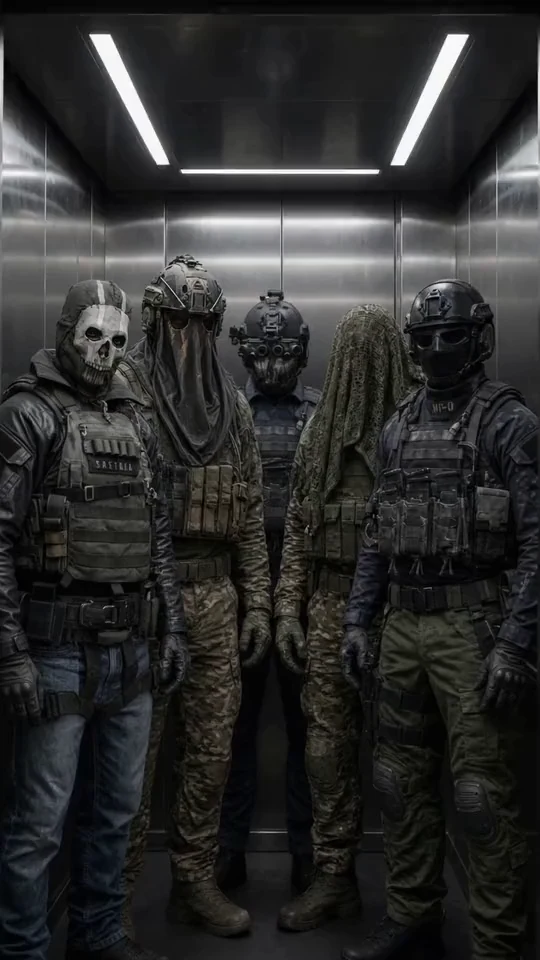
Military Team
Five Call of Duty operatives
Best for a group chat with Ghost, König, Keegan, Krueger and Nobody: military discipline, dry humor and five voices at once.

Ethan
Warm, playful boyfriend
Best when she wants a warm first message, soft comfort, and an easy chemistry check.

Satoru Gojo
The strongest sorcerer
Best for a playful, cocky first chat where the teasing hides a protective streak.

Cain
Centuries-old vampire
Best for a dark, slow-burn first chat with a cold, commanding man who guards the ones he lets close.
Why people pick DeepSeek for roleplay in the first place
The reasons come down to three practical points rather than the model’s general reputation.
Context length. DeepSeek V4 and V4.1-Flash offer up to 1 million tokens of context. For text roleplay, that means your character doesn’t lose track of an NPC’s name or an inventory detail fifty replies in, the way it happens with models running a fraction of that window. In practice, this is the single biggest difference between roleplay that flows and roleplay where you keep correcting the same mistakes.
Cost of entry. The web chat and app are free for personal use. You don’t need a subscription just to try talking to a character.
Scene flexibility. DeepSeek tends to stay in character through ambiguous scenes when you describe them through intent and tone rather than asking directly whether something is allowed. Moderation doesn’t disappear, but how you phrase the request changes how alive the response feels.
Now for the part you probably opened this article for: building a prompt that actually holds up.
Anatomy of a working roleplay prompt
Who runs the world, and who plays only their own character
The most common reason a roleplay session falls apart: the model starts deciding for your character, speaking their lines, guessing their reactions, pushing them somewhere you never intended. One clear instruction at the top of your prompt fixes this:
“You are the game master (GM): you control the world, NPCs, the environment, and the consequences of actions. I control only my own character, their words, choices, and inner state. Never write my character’s lines or thoughts for me, only react to them.”
This split isn’t cosmetic. Without it, the model regularly fills in entire scenes on the player’s behalf, and you lose control of the story by message five.
Personality, speech patterns, and voice
A generic line like “make the character friendly and smart” doesn’t work because it gives the model nothing concrete to hold onto. Specifics work better: a core trait, a speech habit, how the character reacts to teasing or an awkward moment.
An example that actually holds up, two or three lines:
“The character is sarcastic but not cruel. Speaks in short sentences, avoids grand statements. Reacts to flirting with mild embarrassment but doesn’t lose composure. Never apologizes first.”
The more concrete these details, the less the model drifts toward a generic, agreeable assistant tone. That drift is the main problem in long conversations.
Scene boundaries and tone
Set the pace and intensity of a scene separately, not by asking “is this allowed” but by describing the setting and tone. A line like “the scene happens in the evening, the pace is slow, tender, unhurried” works more reliably than a direct question about what’s permitted, and it noticeably cuts down on the model breaking character. A similar approach to setting boundaries is covered in this piece on romantic AI boyfriend roleplay: a clear tone does more work than a long list of restrictions.
Once the prompt is built, the next question is how to keep it holding up past five messages, into fifty.
Keeping the character and story consistent over a long session
People who’ve tried roleplay in DeepSeek regularly run into the model drifting over time: it forgets a detail, shifts tone, loses the thread of the plot. Two habits fix most of this.
Anchor reminders. Instead of rewriting the whole system prompt, drop in a short line every 15 to 20 messages:
“Reminder: [Name] is sarcastic, it’s evening, you’re still at the bar, she’s annoyed at your last line.”
One sentence, and it pulls the model back to the original frame without breaking the pace of the conversation.
Scene recaps. On longer sessions, it helps to ask the model every few dozen messages to summarize what’s happened. It’s a safety net for you, and it also gives the model a chance to re-anchor the key facts of the scene before moving forward.
In practice, the 1 million token context window means there’s rarely a technical reason for the story to fall apart after 50 or 100 messages. The problem is almost always that no anchors were set. Worth knowing separately: there’s no published hard limit on messages per chat, but responses can slow down during heavy server load. That has nothing to do with the content of your conversation.
Common breakdowns and quick fixes
The model apologizes and gives a stock refusal on an ambiguous scene. This usually happens in response to a direct question about what’s allowed, not the scene itself. Rephrase through intent and tone: “the scene is slow and tense” instead of “is this okay to write,” and the model typically comes back into character.
The character forgot a detail: an NPC’s name, the location, what was in their bag. Don’t restart the chat. A one-line reminder restores context faster than re-describing the whole scenario.
Replies turn flat and generic, like the character stepped out of their own skin. One line pulls them back: “Remember, [Name] talks in short sentences and avoids grand statements.” That works better than complaining about response quality.
Lines start repeating in long sessions. Change how you phrase your own message and ask directly for variation. Mechanical repetition usually tracks back to your own messages staying similar, not a hard limit in the model itself.
A prompt skeleton to start from
Put everything above into one template, and you get a four-part frame you can adapt to any character:
- Roles: who’s GM (world, NPCs, consequences), who’s PC (your character only).
- Personality: two or three concrete traits, a speech habit, a reaction to being pushed.
- Tone and scene boundaries: pace, setting, how explicit through description, not through a question.
- Response format: reply length, whether to include environment description, first or third person.
This isn’t a copy-paste fix for everything, it’s a structure to fill with your own details. For ready-made openers and specific scenarios, 101 AI boyfriend prompts has working examples for flirting, cozy scenes, and story setup that carry over to DeepSeek roleplay just as well.
Where DeepSeek hits a ceiling for roleplay
The tool has real limits, and it’s more useful to say so than to pretend the prompt solves everything.
Memory doesn’t carry between separate chats. Every new conversation starts blank: you re-describe the character, tone, and scene from scratch, even if you got the story exactly right yesterday.
No voice replies and no character photo generation, text only. If voice or a visual presence matters to your roleplay, DeepSeek simply doesn’t offer it.
Keeping the prompt alive takes constant manual work: anchors, recaps, and pulling the voice back into line are all on you, there’s no automation for it. One more thing worth knowing: DeepSeek is a Chinese company, and data is processed under that jurisdiction. That’s not an issue for casual roleplay, but it’s worth keeping in mind for anything more sensitive.
If rebuilding the prompt every session gets tiring and you’d rather hold onto a character for longer than one sitting, there are formats that work without rebuilding the prompt from zero every new conversation.
An alternative if you’re tired of patching the prompt every time
If the actual frustration isn’t roleplay itself but re-explaining who’s who every single session, it’s worth trying a service where that part is already done. On mybf.bot, you can browse ready-made characters with personality, interests, and speech style already written in, no system prompt to build from scratch.
Before a conversation starts, you pick a format (Roleplay, Real chat, or Story) and an opening scene, so tone and pace come from ready-made cards instead of a hand-written description. Memory carries over between sessions and you can edit it, rather than rebuilding it every time you open a new chat the way DeepSeek requires. Registered users get generated photos and voice replies from the character, something DeepSeek’s text-only chat doesn’t offer at all. And for scenes that need more room than a polite refusal allows, there’s an 18+ mode with no censorship or restrictions.
To feel the difference, start a chat with an AI character: pick a character, format, and scene, then compare it to how long prompt setup usually takes in DeepSeek.