

What is Emochi AI, and who will enjoy it?
Emochi AI is a character chat service built around roleplay with ready-made and user-created AI characters. You choose a character card and opening situation, answer the first message, and develop the conversation like an interactive story.
The official Emochi catalog leans heavily toward anime, manga, games, romance, drama, and fantasy. Everyday situations sit beside school conflicts, supernatural adventures, and characters inspired by familiar fictional archetypes. On Android, users can also create characters and generate images connected to a conversation.
The format works particularly well if you like browsing scenarios. Open a card, read the premise, and a minute later you might be arguing with a space captain or explaining yourself to an unusually suspicious roommate.
That abundance feels generous on the first evening. A few days later, different questions start to matter. Will the character maintain a distinct personality? Will it remember yesterday’s promise? How often will you need to reconstruct the story yourself?
Companion picks
Pick a character to start with
Try a few different characters before you decide who feels right.
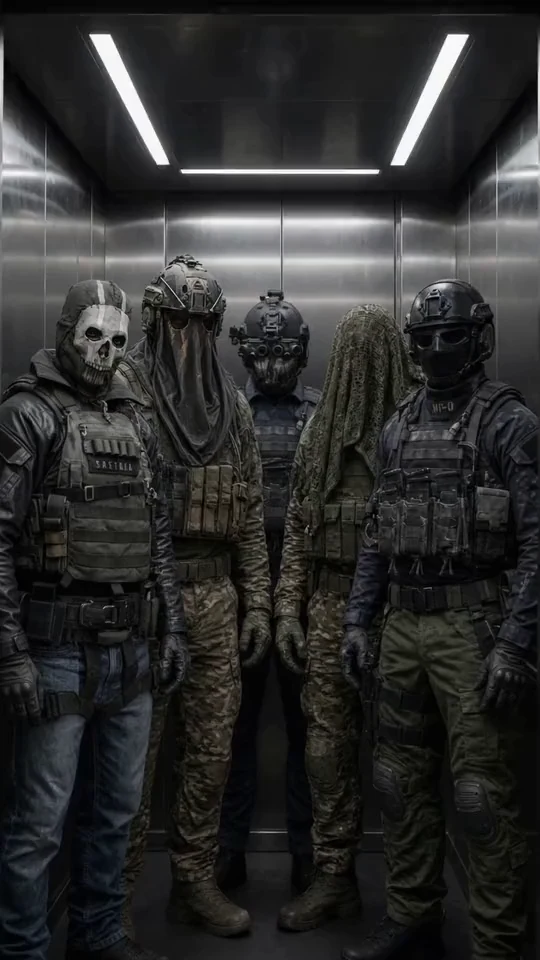
Military Team
Five Call of Duty operatives
Best for a group chat with Ghost, König, Keegan, Krueger and Nobody: military discipline, dry humor and five voices at once.

Ethan
Warm, playful boyfriend
Best when she wants a warm first message, soft comfort, and an easy chemistry check.

Satoru Gojo
The strongest sorcerer
Best for a playful, cocky first chat where the teasing hides a protective streak.

Cain
Centuries-old vampire
Best for a dark, slow-burn first chat with a cold, commanding man who guards the ones he lets close.
The first evening: the premise mattered more than the portrait
How I chose a character
Opening Emochi for the first time feels like scrolling through an endless wall of anime series. The portraits are expressive, and many characters seem ready to threaten, seduce, or fall in love before you have even opened the chat.
I quickly stopped choosing by artwork and started reading the scenario descriptions.
A useful card explains who the character is, what happened before the conversation, and why this meeting matters. That gives the model something to do. It is far more helpful than a mysterious expression paired with a personality made from words such as “smart,” “complicated,” and “slightly dangerous.”
I picked a story in which the character had been waiting for a meeting but suspected the other person of deception. It was a simple way to test initiative. A character that understood the role would notice an action or an omitted detail instead of producing a decorative greeting.
One line was enough to start the scene
My opening message was:
I placed someone else’s key on the table and sat opposite him. “You already know where it came from, don’t you?”
The character picked up the key, connected it to the backstory, and introduced a new suspicion. I did not need to explain the room, the relationship, or three years of imaginary history. The scene moved immediately.
That was an excellent start, but a detailed card can carry only the first few exchanges. The more revealing test begins after the original premise runs out and the model has to sustain the character by itself.
What became noticeable after a month
Some characters lose their individuality
Characters with a specific goal performed best. If someone needs to hide a mistake, earn a confession, or guide you through a dangerous place, the character has something to do beyond agreeing and flirting.
Vague profiles slipped into generic reactions sooner. The words changed, but the response often followed the same pattern: an intense look, a step closer, then a question about feelings. That can work in a short romantic scene. In an adventure, the repetition starts to squeak like a door hinge.
The selected model makes a substantial difference. Emochi’s paid subscription includes access to specialized and more capable models, additional instructions, response-length controls, and creativity settings. These controls affect the conversation more than the raw number of available cards. One carefully configured character can be more engaging than ten loosely written characters using the standard model.
Memory reveals its limits when you return
Several days later, I reopened the main story and mentioned the key again. The character retained the general conflict but missed one agreement connected to it. A short reminder restored the scene, although the experience began to feel a little like maintaining story accounts.
Emochi uses a dedicated memory space. Paid access expands it, and older details can be displaced as that space fills. The main relationship may survive while a minor promise or secondary character disappears from context.
This does not make long stories impossible. It means the reader has to help maintain continuity, especially when a conversation contains several people, locations, and unresolved events.
Good AI companion memory should also remain controllable. The distinction between recent context, saved details, and editable memories is covered in this guide to how memory should work in an AI companion chat.
Delays hurt roleplay more than ordinary chat
A casual chat can survive a pause. Roleplay is less forgiving. You send an action, expect a reaction, and end up watching a loading indicator while the momentum drains out of the scene.
One Google Play review describes an unusually long wait for a generated response. During my own use, the more annoying moment was returning to a conversation and checking whether the last part of the scene had been preserved.
A subscription removes ads and provides priority response processing. For an occasional short exchange, that is a convenience. During a long story, pauses and ad interruptions affect the rhythm of the conversation itself.
Using Emochi: catalog, characters, and settings
Finding a worthwhile scenario
The catalog becomes easier to use when you browse by theme, tags, and opening situation. Character cards on the website show a short premise, while Emochi World on iOS organizes characters around themes and popular roles.
I would not begin with the most popular portrait. Open several cards and look for a character with a clear motive. “A caring acquaintance” leaves a great deal of empty space for the model to fill. “An acquaintance arrives carrying an item you never gave them” already creates tension and a reason to respond.
The huge catalog is enjoyable to explore, but it can also become its own distraction. An evening intended for one story can end with twenty open profiles and no message sent.
Creating your own character
Emochi lets users define a character’s traits, personality, and backstory. Paid access adds an extended biography. The more precisely you describe motivation and behavior, the less exposition you need in the opening message.
Behavioral details work better than a row of flattering adjectives. “Distrusts compliments and answers them with a joke” will influence a conversation more clearly than a long list of traits.
The opening situation should also contain an action. Instead of writing “we have known each other for years,” try “we meet after an argument, and the character brings the letter they promised to destroy.” The chat immediately has an object, a conflict, and a detail you can use to test memory later.
Model, response length, and creativity
The standard model is suitable for short, casual conversations. A specialized model and longer responses make more sense for detailed roleplay. Raising the creativity setting can produce unexpected turns, although a high setting may also pull the character away from the original situation.
Paid users can add custom model instructions that affect tone, detail, emotion, and response logic. This is more than a cosmetic preference. The same character can become a restrained conversational partner or a highly descriptive narrator depending on these controls.
Managing a long story can still become awkward on iOS. In one Emochi World review, a user asks for the return of the previous rewind function. Without it, removing an unwanted branch requires deleting messages manually. That sounds minor until the conversation is several screens long.
Photos and voice in Emochi
Images work best as story moments
The Android version can generate images based on the conversation. I found the feature more useful when I requested a specific moment from the story instead of another generic portrait.
That makes the result easier to judge. Does the location match? Is the clothing consistent? Does the image carry the mood of the scene?
Sometimes the picture genuinely feels like a continuation. At other times, it is attractive but almost unrelated. One Google Play reviewer also describes cautious image moderation and unsuccessful attempts that required repeating the request.
A subscription includes a daily image allowance, while additional interactions may consume Mochi, Emochi’s internal currency. I treated images as highlights for important moments rather than illustrations for every exchange.
For a wider comparison of how companion apps handle visual media, see this guide to AI character chat apps that generate images.
Voice availability depends on the version
Emochi World for iOS promotes characters with individual voices. A well-matched voice can add personality, especially when the delivery suits the character’s temperament.
The website, Android app, and iOS version do not offer identical interfaces or features. Voice support in Emochi World therefore does not guarantee the same voice experience everywhere else.
Before choosing a service, decide which medium matters most. Text gives you control over pace. Voice can make a character feel more distinct. Images support the visual side of a story, but they are only useful when they remain connected to the conversation.
Website, Android, and iOS are different experiences
Using Emochi in a desktop browser
The website lets you browse the catalog, open a character profile, and start chatting in a browser. A larger screen is comfortable for detailed profiles and long roleplay scenes, particularly if the mobile feed feels cramped.
The web interface is not simply an enlarged copy of the app. Settings and available actions are arranged differently. One App Store review also describes a case where signing into the web version did not restore the user’s expected chats and profile setup.
Emochi on Android
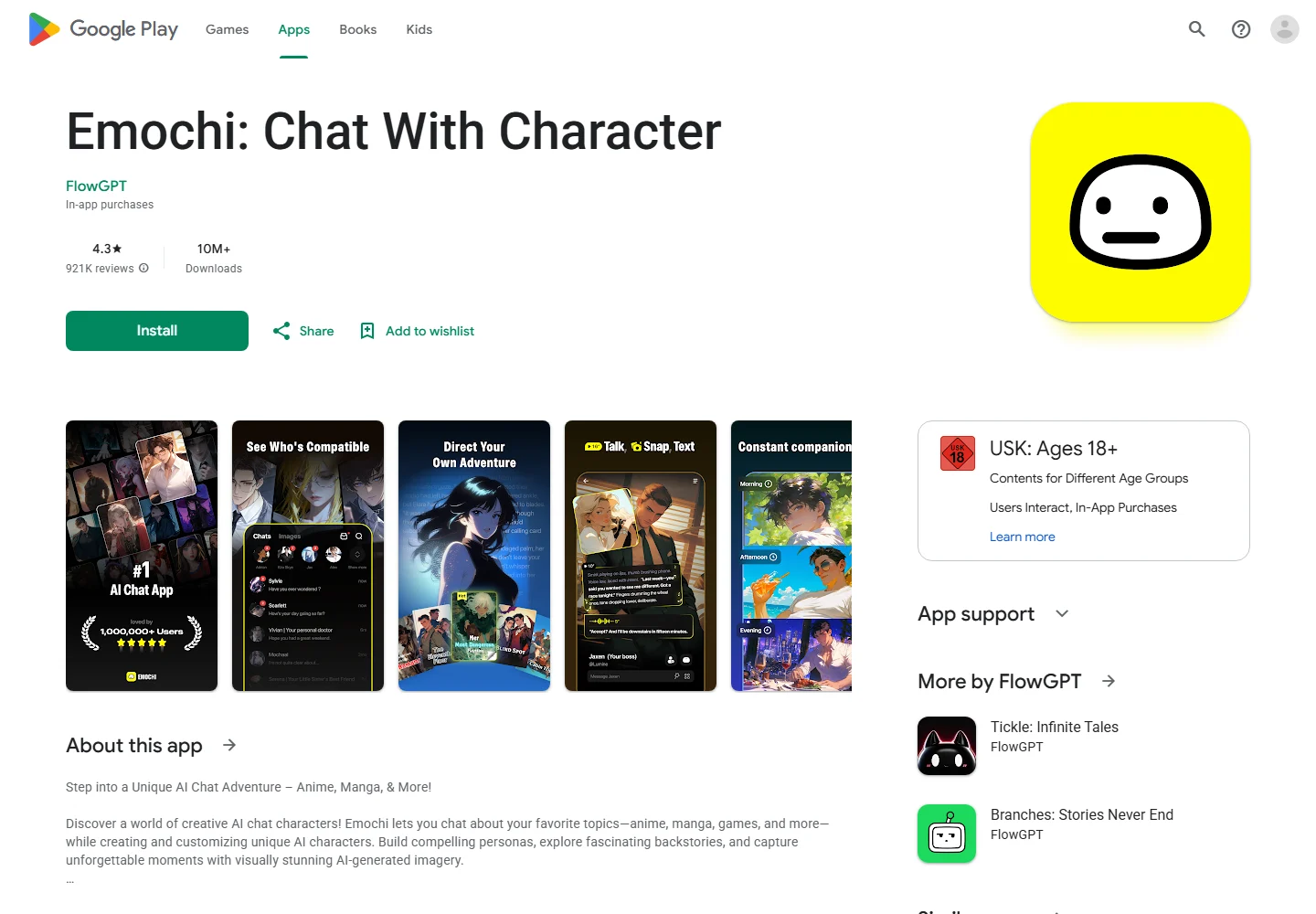
The Emochi Android app combines character discovery, creation tools, roleplay stories, and image generation. Published reviews praise the categories, response styles, and model selection. A separate review reports a very long generation delay.
Google Play gives the app an 18+ rating. That rating describes the store listing and should not be interpreted as a promise that every form of adult content is supported.
Emochi World on iOS
On iPhone and iPad, the service appears as Emochi World. It is a separate version with a character catalog, thematic filters, voices, and character creation.
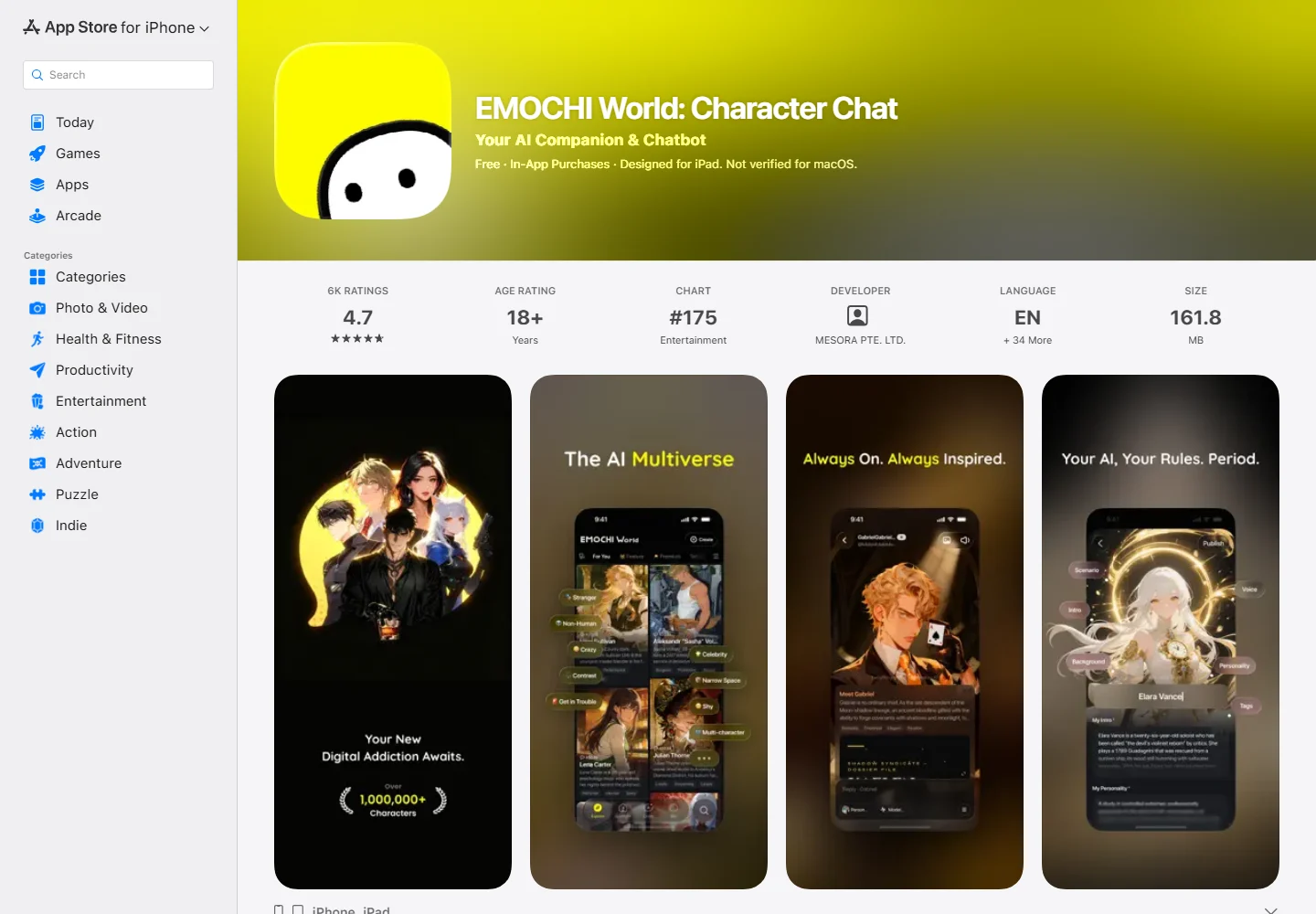
The App Store gives Emochi World an 18+ rating, but the app is presented as a moderated service focused on healthy and positive scenarios without inappropriate or harmful content. Readers looking specifically for explicit adult roleplay should keep that boundary in mind.
One review asks for the old message rewind feature to return. Another describes a separate problem with transferring chats and profile details to the web version. These cases show why Emochi World should not be treated as an exact copy of the Android app.
What happens to messages and images
Emochi processes account details, role and model settings, conversation text, and uploaded images. Messages and images are stored on the service’s servers, and users can request data deletion. The relevant categories and procedures are explained in the Emochi privacy policy.
Do not send passwords, payment card details, identity documents, private keys, or other sensitive information that you would avoid uploading to any entertainment platform.
How much does Emochi cost?
At the time of this review, Emochi offered two monthly subscription tiers:
| Plan | Price | Billing period |
|---|---|---|
| Plus | $9.99 | 1 month |
| Ultra | $29.99 | 1 month |
The free experience includes text chat through the standard model, advertising, basic memory space, and a narrower set of controls. Stronger models, expanded memory, additional instructions, and some media features require a subscription or Mochi.
The Emochi subscription page lists these paid benefits:
- No advertising
- 2,000 Mochi per month
- A 30% discount on Mochi top-ups
- Specialized and more capable chat models
- Additional memory space
- Priority response processing
- A daily image allowance
- Extended character biographies
- Controls for model instructions, response length, and creativity
The practical difference rarely appears in the first message. Paid access becomes more noticeable when you keep one story running for weeks, switch between models, generate images, and want to repeat fewer details.
The free version is enough to sample several character cards and judge the basic chat style. Ads, the standard model, and smaller memory capacity become more visible in longer conversations.
What do Emochi users say?
Positive Google Play reviews mention the range of categories, adjustable response styles, and access to stronger models. In some reports, changing the model helped a character develop the scene more actively and pay closer attention to details.
Memory is a recurring point of friction in published store feedback. Users describe forgotten events and secondary characters after conversations grow longer. A separate Google Play review concerns slow response generation.
The iOS complaints are more specific. One person misses the ability to rewind to an earlier message. Another describes a problem carrying account content into the web version.
The overall picture matches my month of use. Emochi can produce a genuinely entertaining scene, but long stories ask more from the selected model, the available memory, and the reader’s patience with platform differences.
Emochi pros and cons
Pros
- Large anime-oriented catalog with ready-made story premises
- Fast roleplay setup without building a character from scratch
- User-created characters with customizable traits and backstories
- Choice of models and detailed response controls
- Image generation connected to conversations
- A browser version that works well for long scenes
- Character voices in Emochi World on iOS
Cons
- Attractive character cards do not guarantee consistent personalities
- Older details can be displaced as memory fills
- Ads and the standard model noticeably shape the free experience
- The website, Android app, and iOS version differ in features and controls
- Individual reviews report delays, missing continuity, and awkward story management
- Explicit adult roleplay is restricted in the moderated iOS experience
Emochi vs mybf.bot
Emochi is strongest when browsing is part of the fun. Its large anime-focused catalog offers plenty of dramatic openings, visual styles, and familiar character archetypes.
mybf.bot takes a more guided approach. You can choose a curated male or female companion, create a private character, then configure the conversation before the first message. The setup includes Roleplay, Real chat, and Story formats, an opening scenario, response style, and a selectable chat model.
| What you want to do | Emochi | mybf.bot | Better fit |
|---|---|---|---|
| Browse ready-made characters | Large anime-oriented catalog with story cards | Curated male and female companions, filters, personality tags, and voice previews | Emochi for broad anime discovery, mybf.bot for guided selection |
| Create a character | Traits, personality, backstory, and extended biography on paid access | Personality, appearance, interests, voice, lore, and behavior, with private characters or moderated public submissions | mybf.bot offers a clearer route for personal characters |
| Configure the opening | Model, response length, creativity, and instructions depending on access | Format, curated or custom scene, style controls, and chat model before the conversation begins | mybf.bot provides more structure before the first message |
| Continue a long story | Paid plans add memory space, but old details can be displaced | Users can inspect, correct, and ask the character to forget saved details | mybf.bot provides more direct memory control |
| Use photos and voice | Availability depends on the platform and subscription | Registered free accounts include 3 photo generations and 10 bot voice replies per month | mybf.bot keeps media features inside one account flow |
| Chat for free | Standard model, basic memory, and advertising | Registered free users receive 30 text messages per day | mybf.bot has a clearly defined ongoing free allowance |
| Choose adult controls | Moderation differs by platform, with tighter boundaries on iOS | Optional 18+ controls for consensual adult chat and photos, while hard safety rules remain | Depends on the desired scenario and boundaries |
If you enjoy jumping between fantasy worlds and rarely stay with one character for long, Emochi is easy to recommend. The catalog is the product’s main pleasure, and short scenes play to its strengths.
For a continuing relationship with editable memory and a more deliberate opening setup, mybf.bot makes more sense. You can browse ready-made characters and listen to voice previews, or read this broader guide to the features that matter in an AI romantic companion.
Choose a character, select Roleplay, Real chat, or Story, pick an opening scene and model, then start an AI character chat. The first few exchanges should tell you whether you want a disposable adventure or a conversation worth reopening next month.